
How to avoid rework
If you have the work but it is not profitable, the cause is almost always REWORK.
Why can’t I make a profit?
If you have enough work but it is not profitable, the reason for the lack of profitability is almost always REWORK.
Doing architecture is 80% process. Rework is such a fee-killer because spending your time ineffectively on such a large portion of the work just isn’t recoverable
What Is Rework and Why Does It Kill Profits?
What is rework in architecture? Rework refers to any design or documentation task that must be redone due to missing information, scope changes, or premature decisions. It’s the primary cause of unprofitable projects in architecture firms.
Why does rework kill profits? Rework kills profit because your fee is based on creating one design. If you are ineffective in designing the project, you are in effect designing 1.1 projects, or 1.8 projects or maybe even 2.1 projects. Here’s the math.
Your fee is 100 and you set aside 20 for profit leaving 80 to do the work.
If you rework 25% of the project during SDs, DDs and CDs, you have spent 100 to do the work (80 x 1.25). Your profit has shrunk from 20 to 0, and there is no chance of making it up.
How to Build a Rework-Free Process
To avoid Rework you need a process that keeps you always adding to the final product and that keeps you from changing anything because you committed to a solution without knowing all the factors that would have an impact. In other words you need a logical process.
It isn’t realistic to complete a phase of design in one pass. I recommend breaking each phase down into four or more stages so that you are making multiple passes through all the information. You will be building and refining your solution with each pass. I created an outline of this idea in Trello that you can explore here. You can open each “card” to see how I would plan the sequence of tasks. If you use Trello, copy the board to your account and modify it.
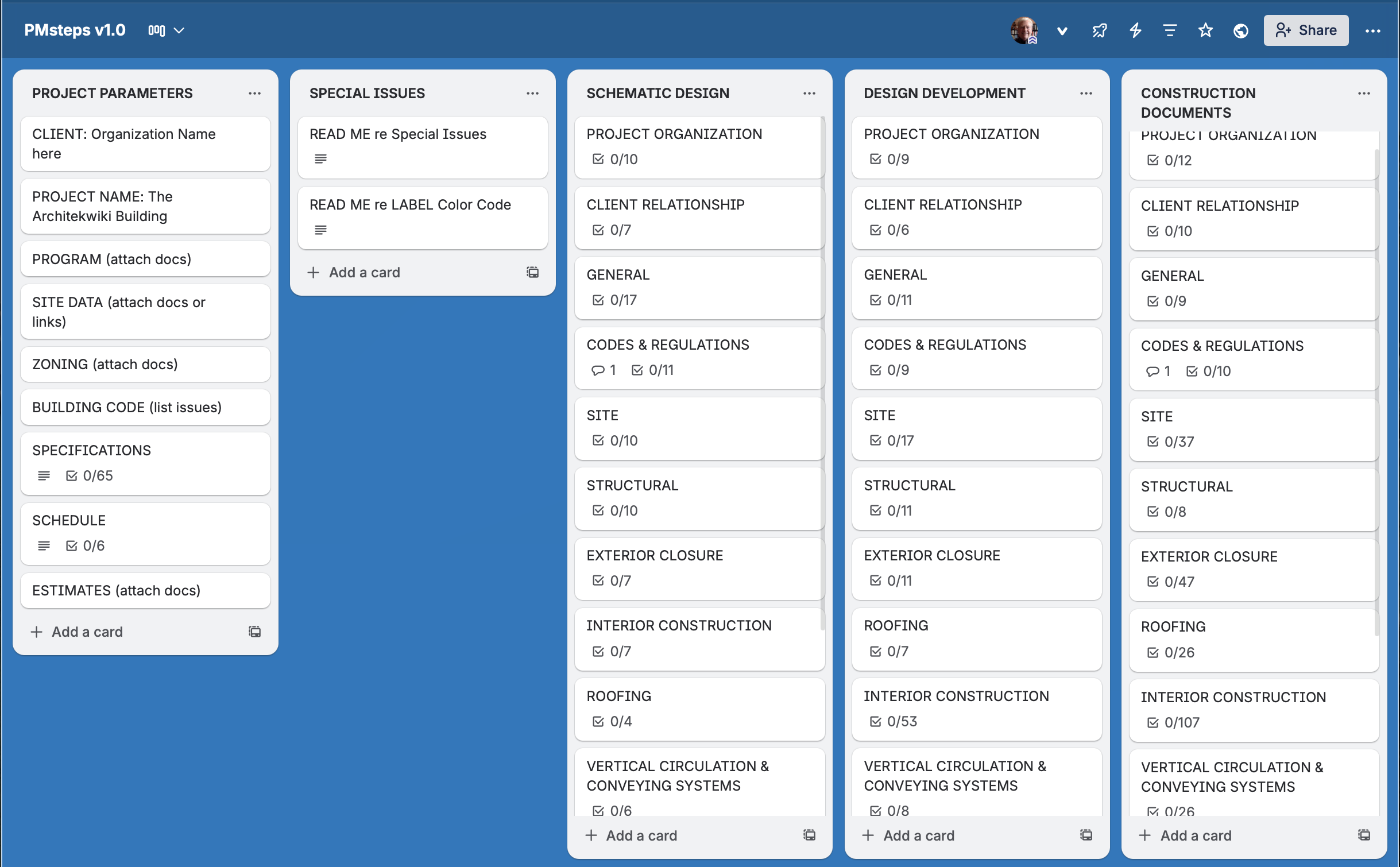
Using Trello to organize a project and reduce rework
Suggested organization of the work
Take each Phase of design
Breakdown each Phase into multiple topics/design assemblies
Further breakdown each topic/assembly into several Stages
Typical Topics and/or Assemblies within each Phase
Project organization
Client relationship
General
Codes and regulations
Site
Structural
Exterior closure
Interior Construction
Roofing
Vertical circulation and conveying
Mechanical systems
Electrical and lighting systems
Equipment
Completing the Stages within each topic amounts to creating your master plan for completing each project effectively.
Another way of developing your own process can be found in this post, The 45 Steps Of Project Management. It lays out how a large project should be arranged to complete it in the most effective way. It is a great starting point for developing your own project management system.
Having a process doesn’t limit creativity in any way.
It simply focuses you on what is real, on what will complete the job in a logical sequence. It isn’t creative to explore ideas or draw details that have no chance of being used. That’s just a carry-over from your college design studio days when you weren’t doing this for a living yet.
